

Messaging Channels
ChatterMate is omni-channel. The same AI agent — with your knowledge base, lead capture, and human handover — answers customers wherever they message you, and every conversation lands in one unified inbox.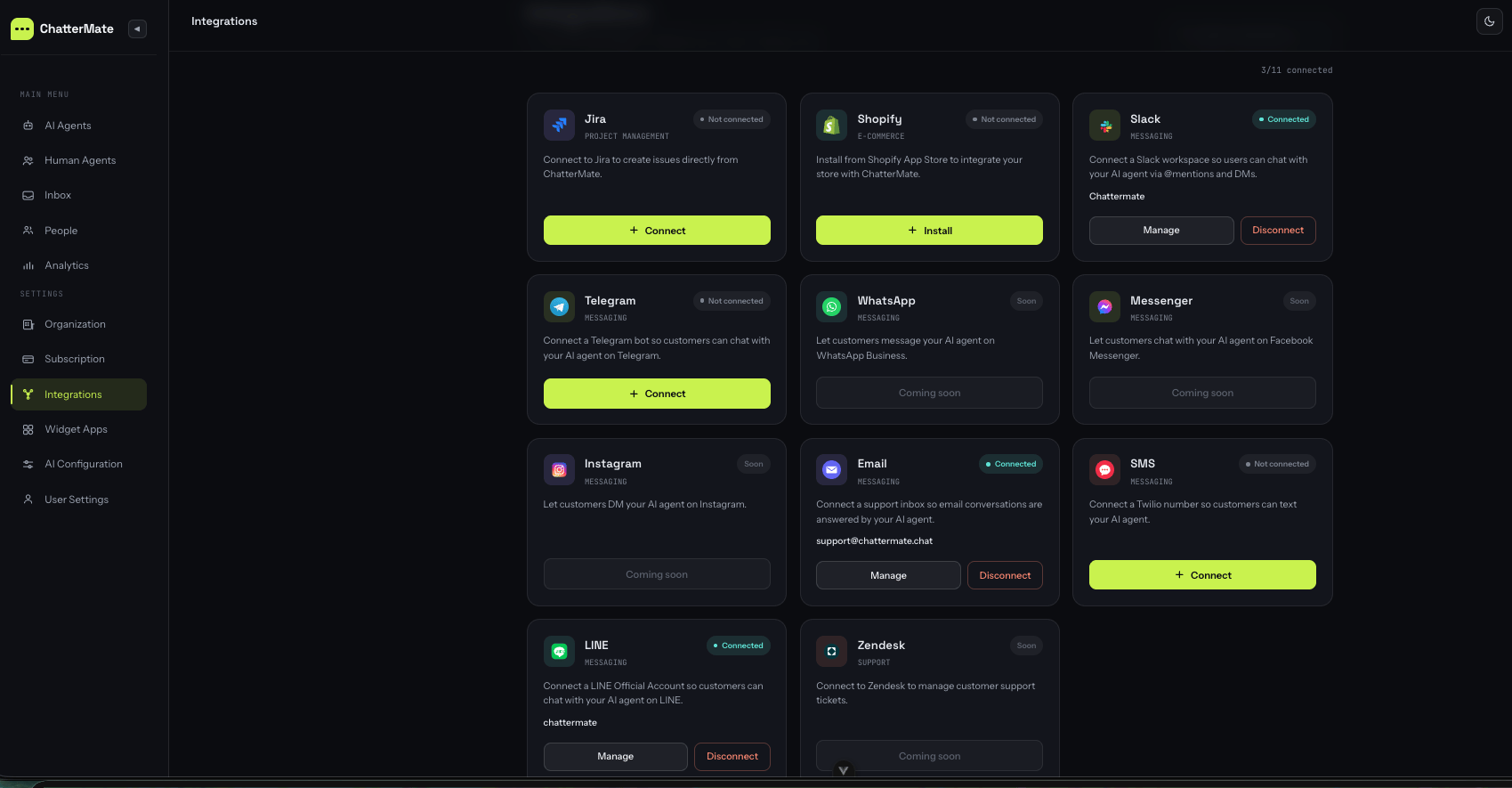
Available channels
Telegram
Paste a bot token from @BotFather. Live in minutes, no approval.
Slack
One-click OAuth. Answers @mentions and DMs in your workspace.
Turn a support@ inbox into an AI-answered channel.
SMS
Twilio, Vonage, MessageBird, Plivo, Brevo or AWS SNS.
LINE
Connect a LINE Official Account with a channel access token.
Official WhatsApp Cloud API. Sign in with Facebook and pick your number.
Messenger
Official Meta integration. Sign in with Facebook and pick your Page.
Official Meta integration. Sign in with Instagram to connect a professional account.
WhatsApp, Messenger and Instagram are official Meta integrations — not unofficial
bridges, so your number, Page and account stay compliant. On ChatterMate Cloud all
three connect in a few clicks: sign in (with Facebook for WhatsApp and Messenger,
with Instagram for Instagram), choose the number or Page, and you’re live.
ChatterMate onboards it under its own reviewed Meta app and registers the webhooks
for you, so there is no Meta app to create, no access token to generate, and
nothing to configure in the Meta dashboard. Self-hosters can still connect all
three with their own Meta app — every channel page covers both paths.
How connecting works
Every channel follows the same three steps. The credential-gathering (step 1) differs per platform — that’s what each channel page walks you through.1
Get your credentials
Create the bot / app / number on the platform (Telegram, Twilio, LINE…) and copy the keys. Each channel page below has the exact clicks.The Meta channels on ChatterMate Cloud skip this step entirely — signing in with Facebook (WhatsApp, Messenger) or Instagram issues the credentials for you.
2
Connect in ChatterMate
Open Settings → Integrations, find the channel card, and click Connect. Paste your credentials — or, for Slack and the Meta channels, approve the sign-in popup and pick the account. ChatterMate encrypts every credential at rest and — where the platform supports it — registers the inbound webhook for you automatically.
3
Assign an AI agent
Right after connecting, ChatterMate asks which AI agent should answer this channel. Pick one and click Assign agent. You can change it any time from the card’s Manage button.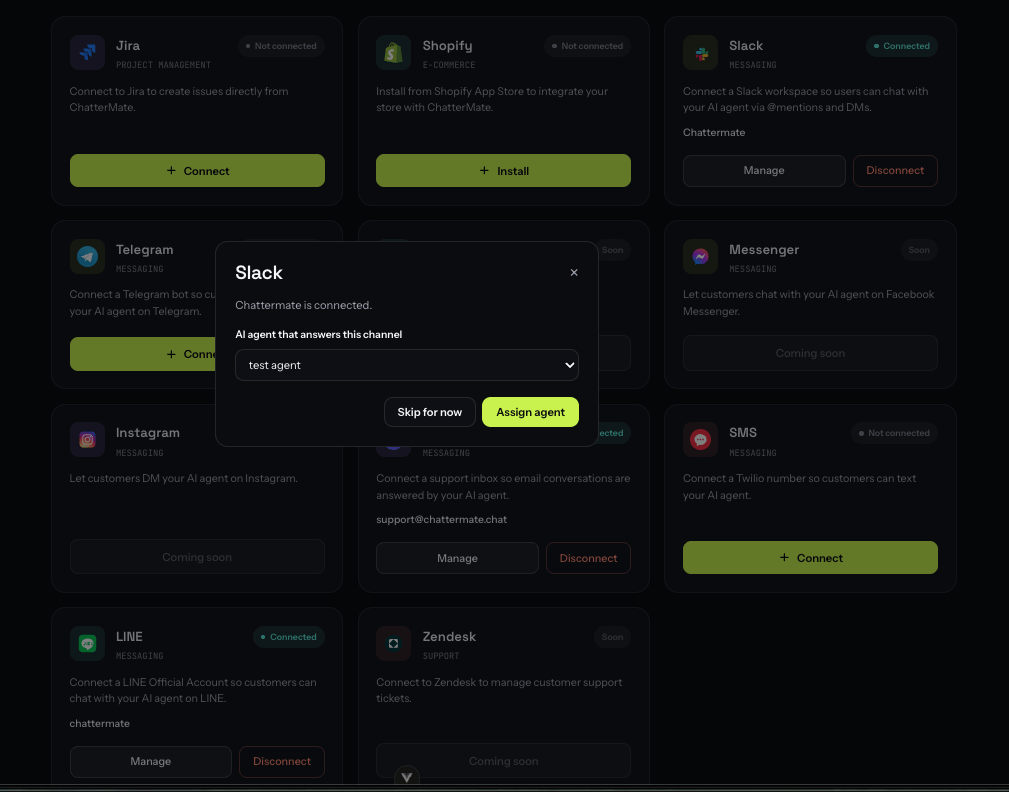
One inbox for every channel
Once connected, messages from all channels flow into Conversations. Each chat carries a badge showing where it came from (Slack, Email, LINE…), and your team replies from the same place — whether the customer is on WhatsApp or the website widget.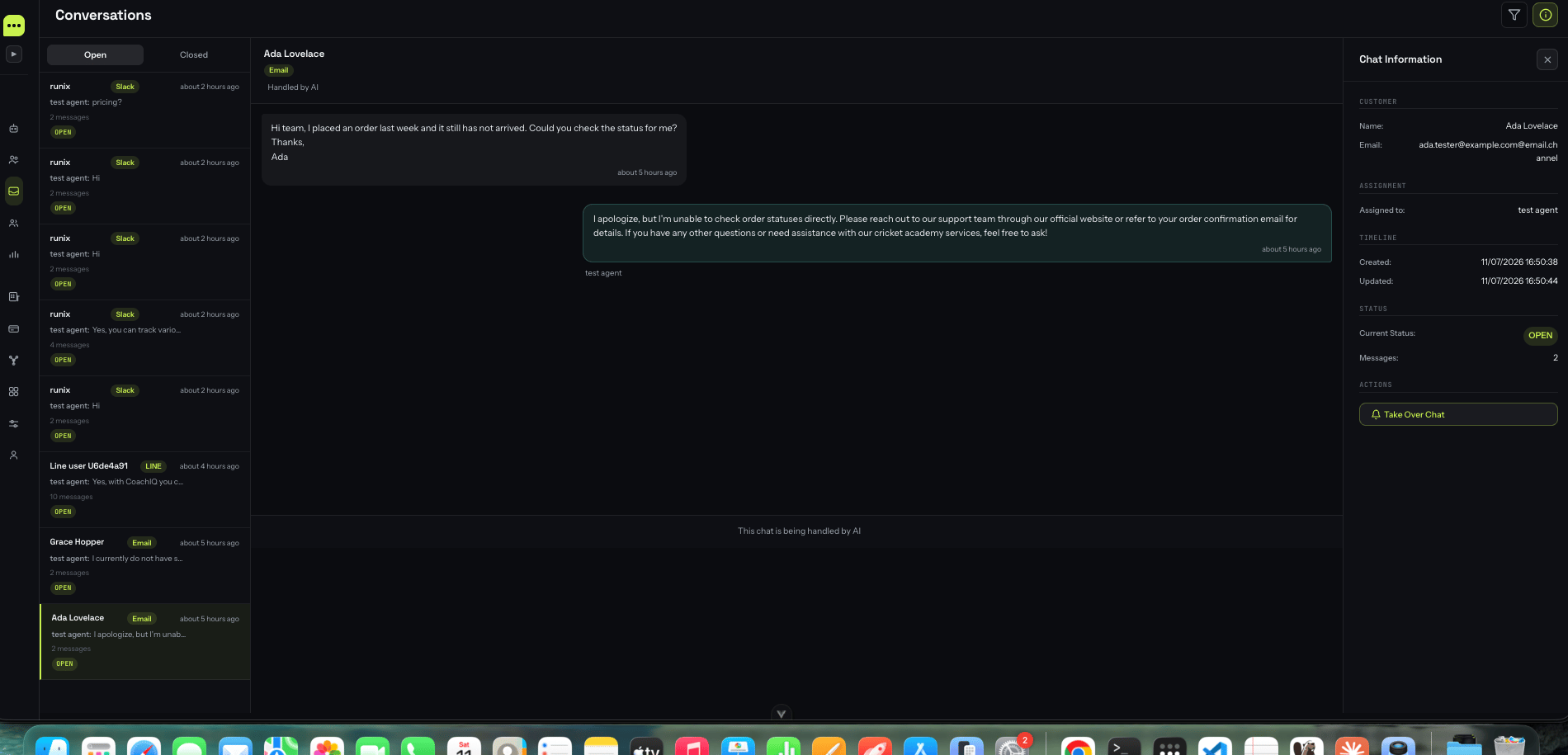
Human handover reaches every channel
When a teammate clicks Take Over Chat, their replies go back out on the customer’s original channel — the Telegram chat, the Slack thread, the email thread — not just the widget. The AI steps aside until the conversation is handed back.Good to know
Credentials are encrypted
All channel tokens and secrets are Fernet-encrypted at rest, and every inbound webhook is signature-verified before it’s processed.
Bring your own accounts
Every channel is bring-your-own-credentials. Self-hosters create their own bots/apps; nothing depends on ChatterMate’s own platform approvals.
Rating is widget-only
ChatterMate never asks customers to rate the conversation on external channels — the rating prompt is exclusive to the website chat widget.
Per-agent routing
Each channel is answered by the AI agent you assign, so different products or brands can have their own agent and knowledge base.
Self-hosting? Inbound webhooks need a public HTTPS URL. Set
BACKEND_URL to your public backend domain so ChatterMate can build and register webhook URLs the platforms can reach.